
To unlock $10B in investment in the work that landscape architects do, the Army Corps of Engineers needs to hear from the landscape architecture community
Only have a few minutes? Here’s the essential action:
The public comment deadline is September 18, 2026, at 5:00 p.m. ET.
Comments may be submitted through the City’s feedback form, by email to boston-csfrm@usace.army.mil, or by mail to the USACE New England District. Click any of the buttons for the address.
Scroll down to learn more
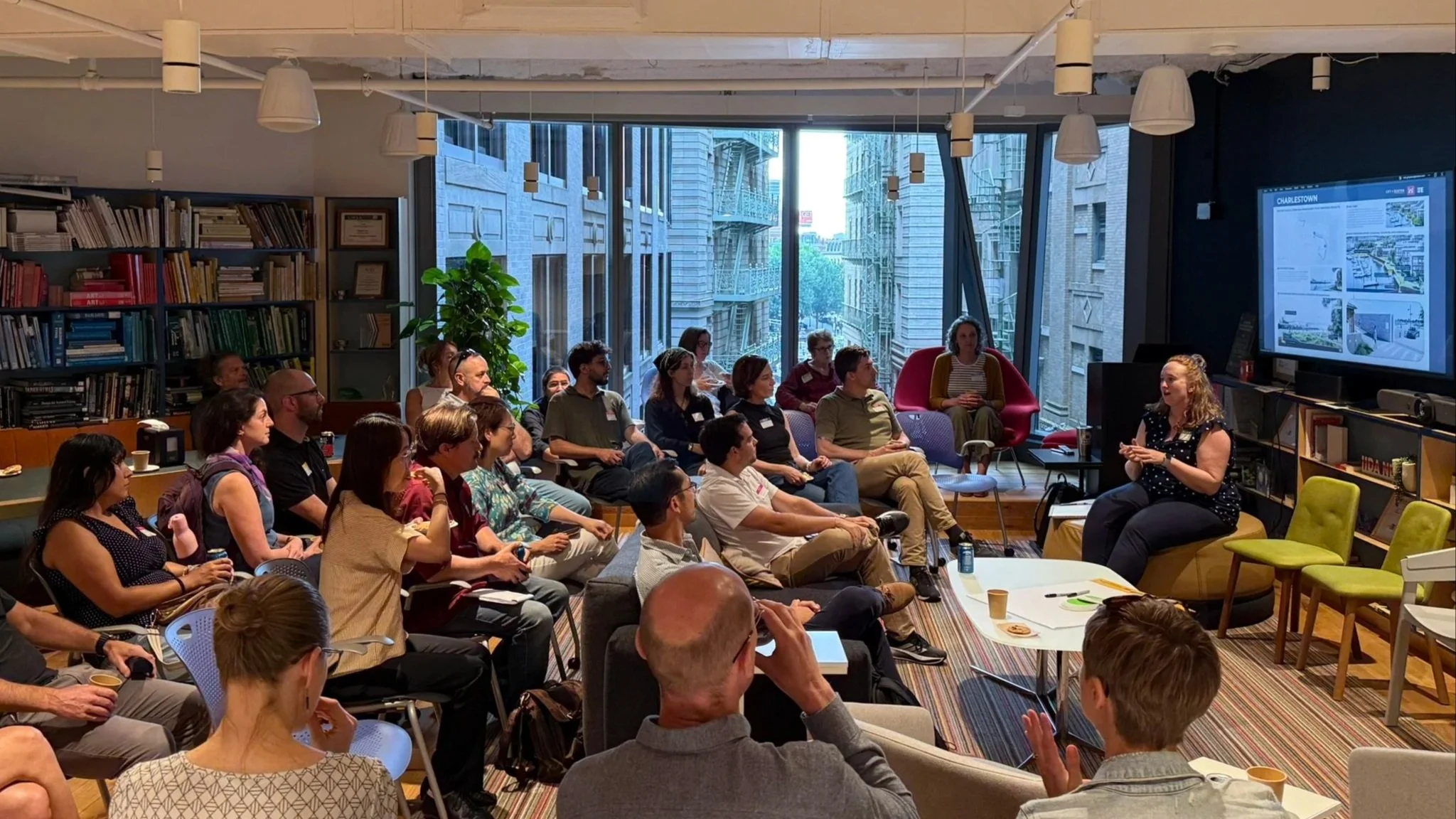
Above: Kate Roosa, Senior Climate Resilience Project Manager, City of Boston, briefs landscape architects about the CSRM draft report, August 11, 2026. Hosted at Stantec.
On August 11, 2026, BSLA brought together landscape architects with representatives from the City of Boston and the Moakley Park design team to discuss the draft Coastal Storm Risk Management feasibility report prepared through the City’s partnership with the U.S. Army Corps of Engineers...
The conversation focused on what the draft report accomplishes, what it leaves unresolved, and how landscape architects, firms, organizations, and residents can provide effective public comments.
A major opportunity for federal investment
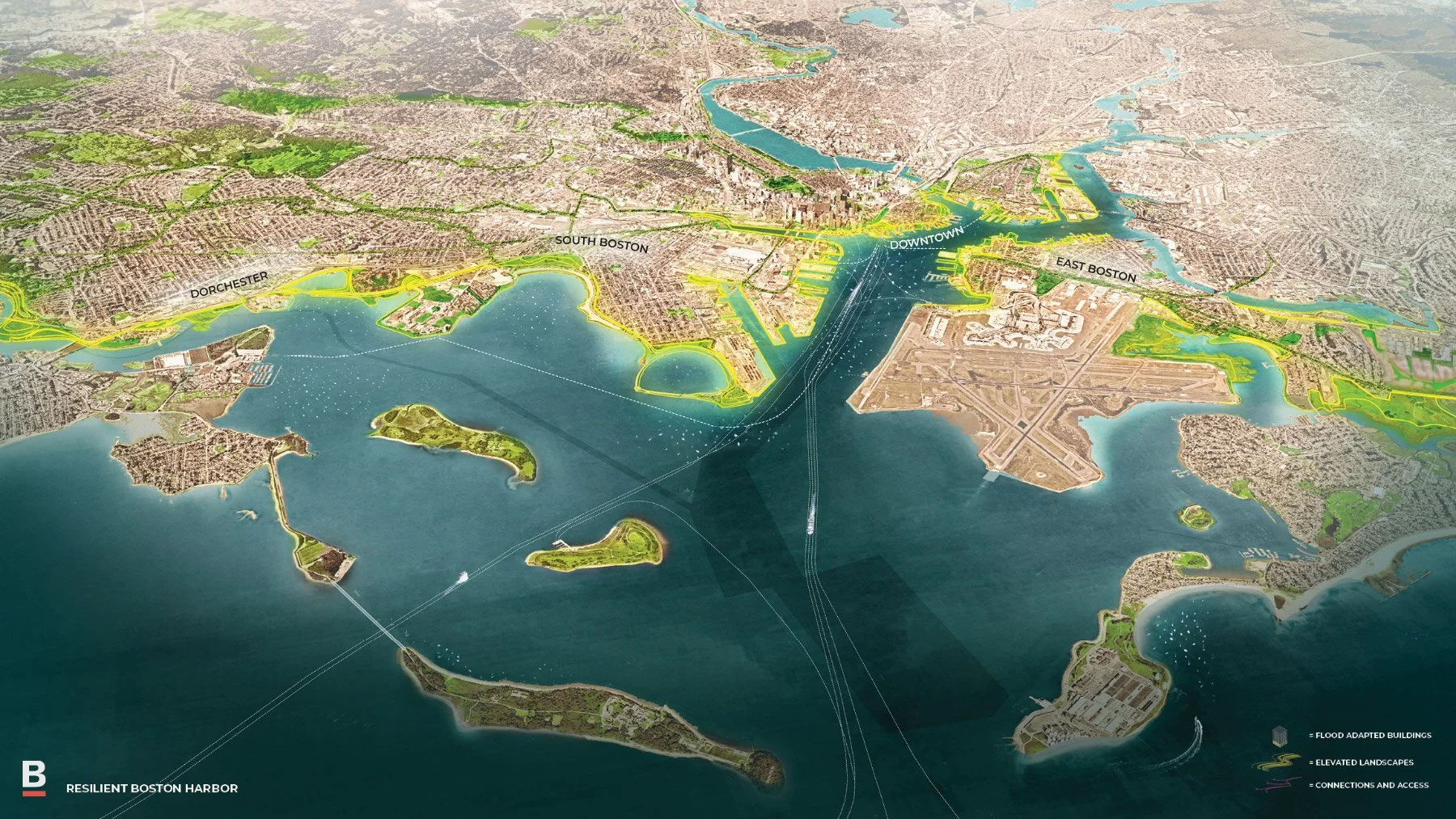
The City of Boston has worked with the Army Corps since 2022 to develop the Coastal Storm Risk Management study. The draft feasibility report is the partnership’s first major written deliverable and represents the federal interpretation of nearly a decade of work completed through Climate Ready Boston and the City’s neighborhood-based Coastal Resilience Solutions plans.
The study identifies approximately 16 miles of infrastructure projects along critical flood pathways, with a preliminary cost of at least $10 billion. If the final plan receives congressional authorization through the anticipated 2028 Water Resources Development Act cycle, it could unlock federal funding for as much as 65 percent of eligible project costs.
The Army Corps estimates that taking no action could result in at least $54 billion in damages by the end of the century. The federal case for investment therefore focuses heavily on protecting lives, critical infrastructure, and Boston’s economic importance to the region and nation.
The report should be understood primarily as a budgetary and authorization document—not as a final design proposal. Its drawings represent approximately 10 percent design development. They establish project alignments, engineering assumptions, and cost allowances, creating a foundation for future appropriations and project-by-project design.
Keep reading this summary of the briefing
Missed that evening? Want to review what was said?
Listen to a recording of the August 11 briefing
What is this about?
Late July, the US Army Corps of Engineers released the Boston Coastal Storm Risk Management (CSRM) Draft Integrated Feasibility Report.
This is a DRAFT report with open comment period now through September 18.
If this report proceeds, it will mean billions of dollars of investment in our coastline, is closely interwoven with landscape architecture and the work of our industry, and will impact and serve as a model for the region and far beyond.
CONTEXT
See WBUR coverage
LINKS TO DOCUMENTS
Find the actual text of the CSRM DRAFT REPORT
Context / summary from City of Boston
LINK TO SUBMIT FEEDBACK
Deadline September 18, 5pm
What do landscape architects need to do?
Submit a comment letter!
The City is aiming for 4,000 comment letters!!!!
Comment letters can come from
Landscape Architecture firms and related companies (builders, suppliers, site maintenance, etc. - all of it)
Residents of the City of Boston
ANYONE who works in Boston, or uses the resources of Boston in some way (Logan airport, the hospitals, universities, sports facilities, parks, museums, etc. etc.)
This includes you!
Here are comment letter resources, tailored* for our BSLA community:
Option 1: Copy/paste
Click the button and then copy one of the samples below, personalizing it per the suggested prompts. Easy peasy.
Option 2: DIY
Your own voice is always a great thing.
Here’s some guidance:
Letter Suggestions for firms and individuals
Use This / Not That Language Guide
Deadline: September 18, 2026, at 5:00 p.m. ET
To Submit: Use the City’s feedback form, by email to boston-csfrm@usace.army.mil, or by mail to the USACE New England District.
Address mailed letters to:
Mr. Todd Randall
U.S. Army Corps of Engineers, New England District
ATTN: City of Boston CSRM Project Team
696 Virginia Road
Concord, MA 01742-2751
*Note: These tools, templates, and suggestions were created from the August 11 briefing recording with the help of AI.
Please read what you submit before you submit it, and always let your own expertise, experience and words lead the day.
Why should I care?
Lead with Landscape:
Why Landscape Architects Across New England Should Comment on Boston’s Draft CSRM Report
Boston’s Coastal Storm Risk Management Study could unlock billions of dollars in federal funding for one of the country’s largest coastal flood-protection systems. Although the study focuses on Boston, its consequences—and the precedents it establishes—will extend throughout New England.
This is an opportunity to lead with landscape: to shape flood protection as integrated public realm that protects communities, strengthens ecological systems, connects neighborhoods, and improves daily life.
This is the moment to influence the framework.
The draft establishes preliminary project alignments, priorities, and funding assumptions—not final designs. Comments submitted now can preserve opportunities for landscape architects and communities to shape stronger public-realm, ecological, access, and design outcomes as projects move forward.
Landscape is essential infrastructure.
Waterfront access, accessible circulation, habitat, recreation, living shorelines, stormwater management, and neighborhood connections are not optional additions to engineered flood protection. They are fundamental to creating infrastructure that is effective, implementable, adaptable, and supported by the communities it serves.
This is also a business and professional-practice issue.
As a professional association, BSLA exists to support the practice of landscape architecture—and that includes advocating for public investment that funds landscape architecture services. This multidecade effort could support firms, create jobs, strengthen regional expertise, and provide opportunities for landscape architects to lead work from planning and community engagement through design, construction, and long-term stewardship. When landscape is recognized as infrastructure, landscape architects are positioned to help shape and deliver that investment.
Boston is a regional asset.
Its transportation systems, hospitals, universities, employers, cultural institutions, and port serve people throughout New England. Coastal flooding in Boston could disrupt regional jobs, commuting networks, healthcare, education, tourism, and economic activity.
The study could shape future federal projects across New England.
USACE’s approach to funding, permitting, hybrid infrastructure, public access, and environmental mitigation may influence future coastal-resilience projects throughout the region. Leading with landscape in Boston can raise expectations for what federally funded infrastructure should accomplish elsewhere.
New England landscape architects bring essential expertise.
Professionals across the region understand coastal and riverine systems, local ecology, permitting, construction, community engagement, public space, and long-term stewardship. Experience from other cities and towns can help identify successful approaches and benefits the draft may not fully recognize.
Boston can become a national model for landscape-led resilience.
This study offers an opportunity to demonstrate how engineered flood protection can work with ecological systems and public landscapes in a densely developed urban harbor—and how those lessons can be adapted for communities of different sizes throughout New England.
Last but not least…
Submitting a comment does not mean endorsing the preliminary drawings as final designs! Landscape architects can say yes to federal investment while also insisting that we lead with landscape—creating infrastructure that is protective, accessible, ecologically productive, community-responsive, and worthy of the places it will shape for generations.
Thank you!
Your voice makes a difference.
The profession of landscape architecture began here, and together we can lead it into the future.
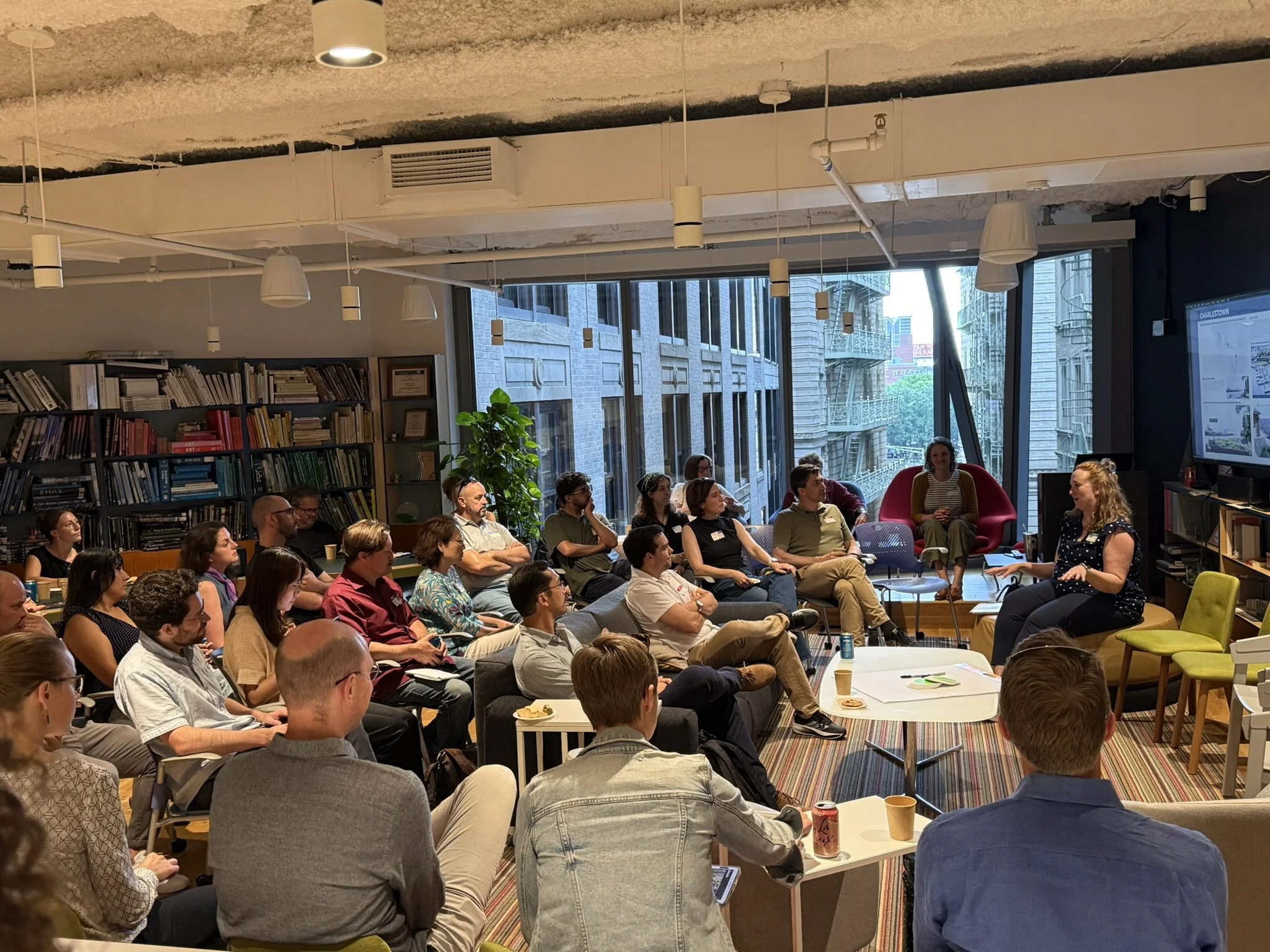
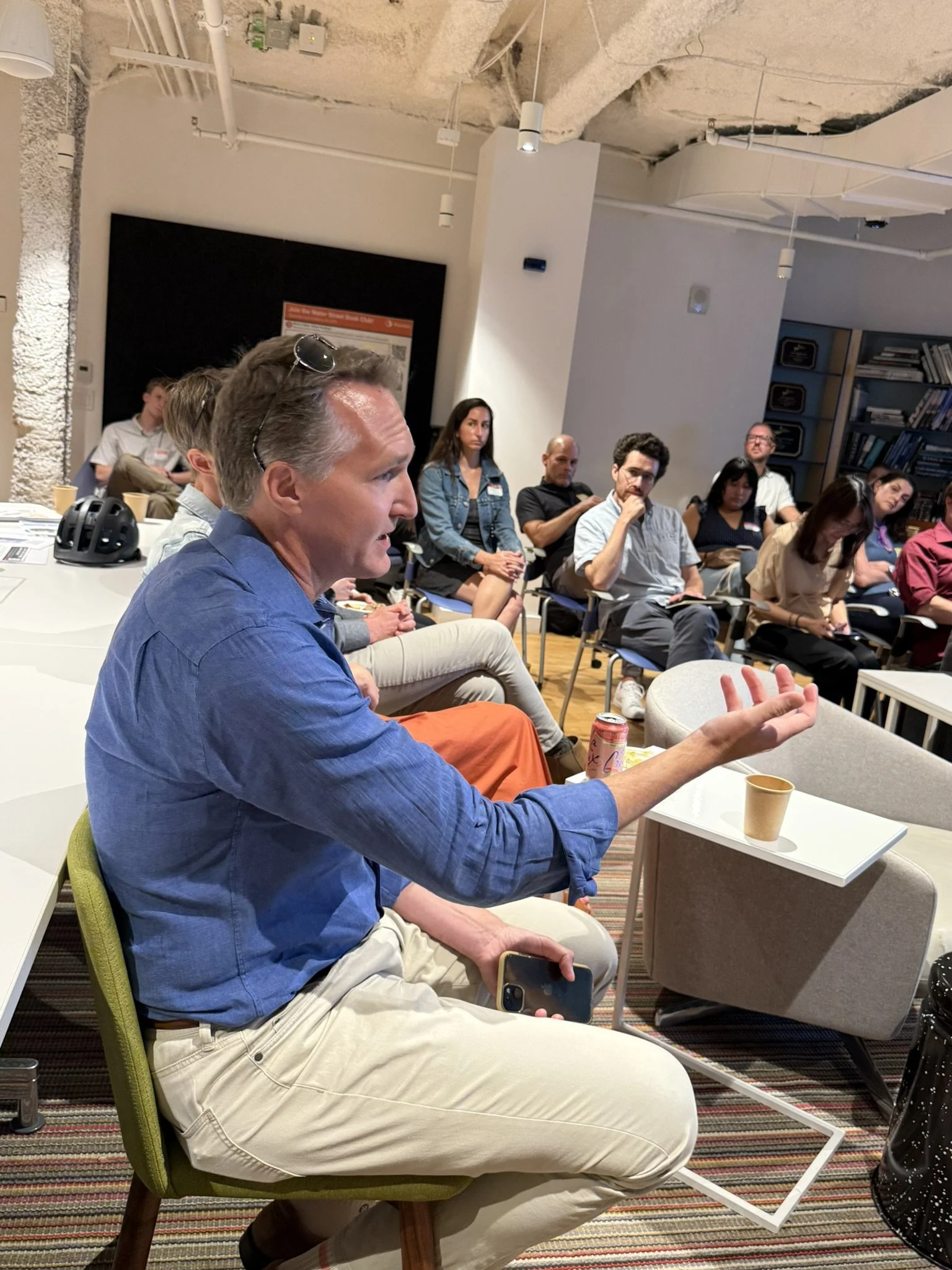
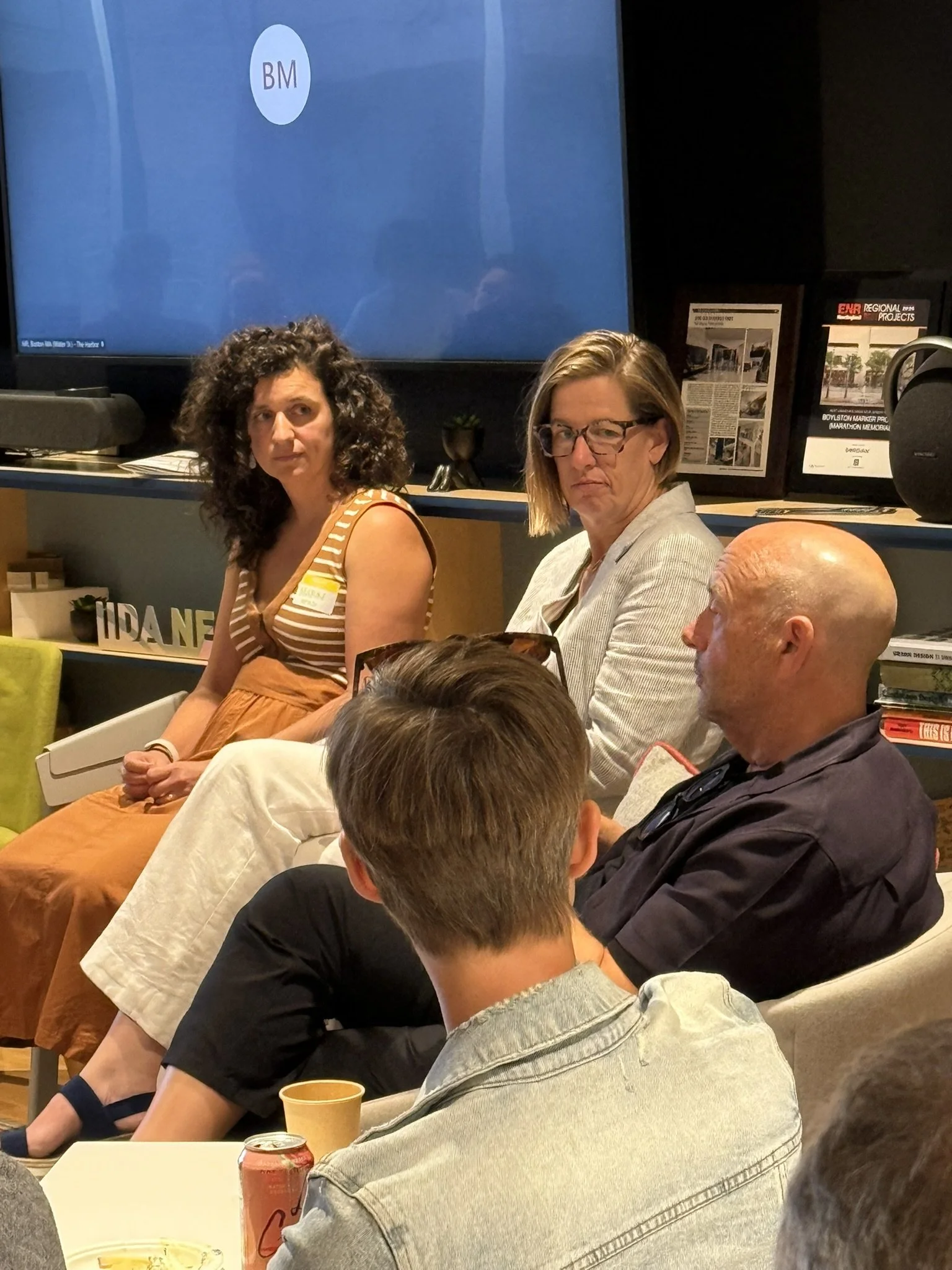
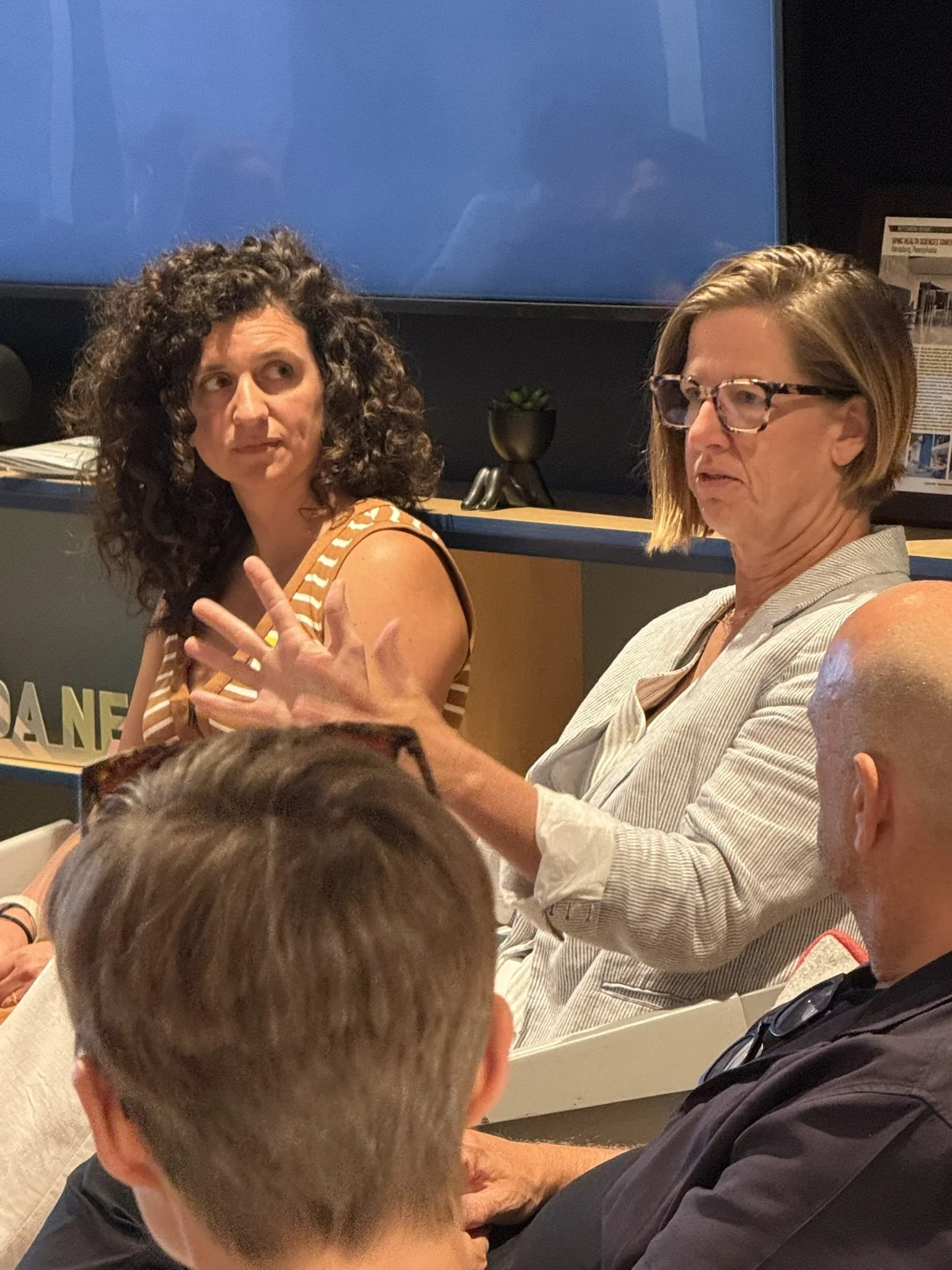
Photos from BSLA’s Landscape Architecture + CSRM Report Happy Hour and Discussion, August 11, 2026. Read the summary of that session here or listen to the recording.