


Fieldday 2026 will take place on Friday, May 1 at the David Rubenstein Treehouse at Harvard University.
Fieldday is the annual conference for landscape architects and design and construction professionals across our region.
Horticulturalists, arborists, architects, engineers, planners, developers, policy makers, academics, green industry leaders; practitioners who create residential gardens to regional parks, outdoor spaces large to small; urban to rural, forest to meadow, river to coast…
All who design, make, and care for landscape architecture in New England: this is for you.
Get your tickets today:
For 1 or 2 tickets, and all Speakers
To purchase 3 or more tickets, with a discount
For information, including sponsorship opportunities, contact Billy Craig at conference@bslanow.org.
Fieldday is created collaboratively by the ASLA Chapters of New England.





Ticket Info
Tickets are all-inclusive and come with FREE parking, morning coffee, lunch, food & drink at the evening reception, and up to 7.0 LA CES HSW + AICP CM credits. (Sessions have also been submitted for AIA LU’s; status: pending.) Use Group Registration for 3 or more to receive a 10% discount. Early Bird rates through April 17.
Ticket Type
General Admission
ASLA Member Rate
Emerging Professional*/Government General Admission
Emerging Professional*/Government ASLA Member Rate
*five years or less in the profession
NOTE: APA members may use the ASLA Member rate. Thank you APA-MA for providing AICP CM credits for this conference!
Early Bird
$350.00
$300.00
$300.00
$250.00
Standard
$450.00
$350.00
$350.00
$300.00
For 1 or 2 tickets, and all Speakers
To purchase 3 or more tickets, with a discount
Getting there
The David Rubenstein Treehouse is located at 20 Western Ave, Allston (Boston), 02134
Traveling to Boston for Fieldday 2026?
Of course, we encourage sharing rides and public transit to the greatest extent possible. And however you get there, we want to make it easy.
CARPOOL: Whether you're coming from Northampton or the Northeast Kingdom or Portland or Providence or anywhere in our region, fill out this form to find others to rideshare.
PUBLIC TRANSIT: There’s a variety of options. The Treehouse is on Western Ave, on the Boston side of the Charles River, with numerous buses nearby and an easy walk from Central Square, Cambridge.
PARKING: Thanks to Parterre Ecological, it is FREE. Included in all tickets. Located directly across the street.
Planning to stay the night?
We reserved a small block at a new hotel right next door. Click this link to be part of it: The Atlas Hotel
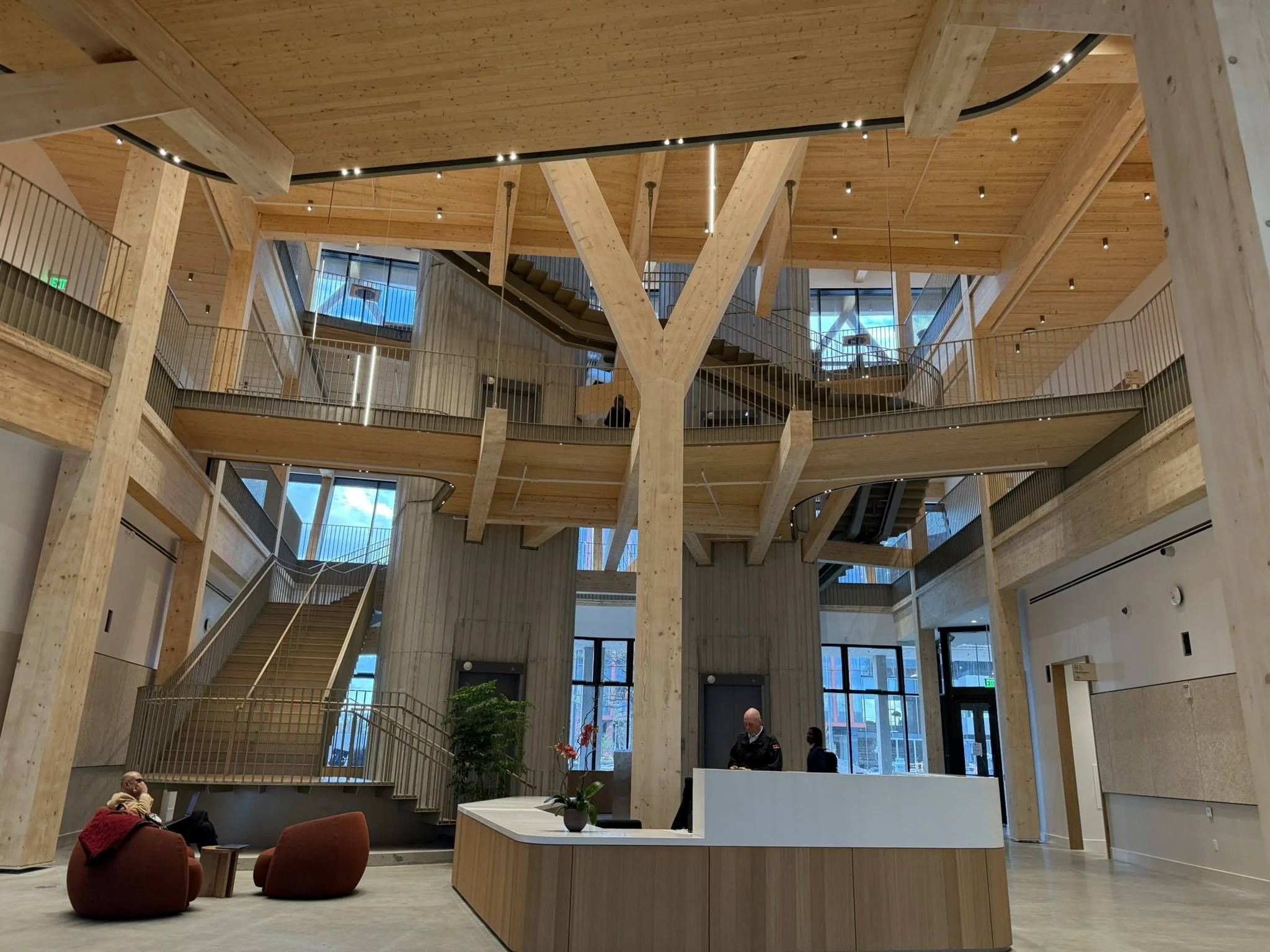
We’re very excited that Fieldday 2026 will take place at the brand new “Treehouse,” an anchor along the new Greenway in Allston…
Read more about this state of the art mass timber building and the new Enterprise Research Campus: “Inside Harvard’s Next Big Urban Experiment,” Metropolis, December 2025
Architecture by Studio Gang. Landscape architecture by SCAPE.
8:30 am
Registration
Kickoff
9:00 am
Climate Action Lightning Talks
9:30 am
Coffee
11:00 am
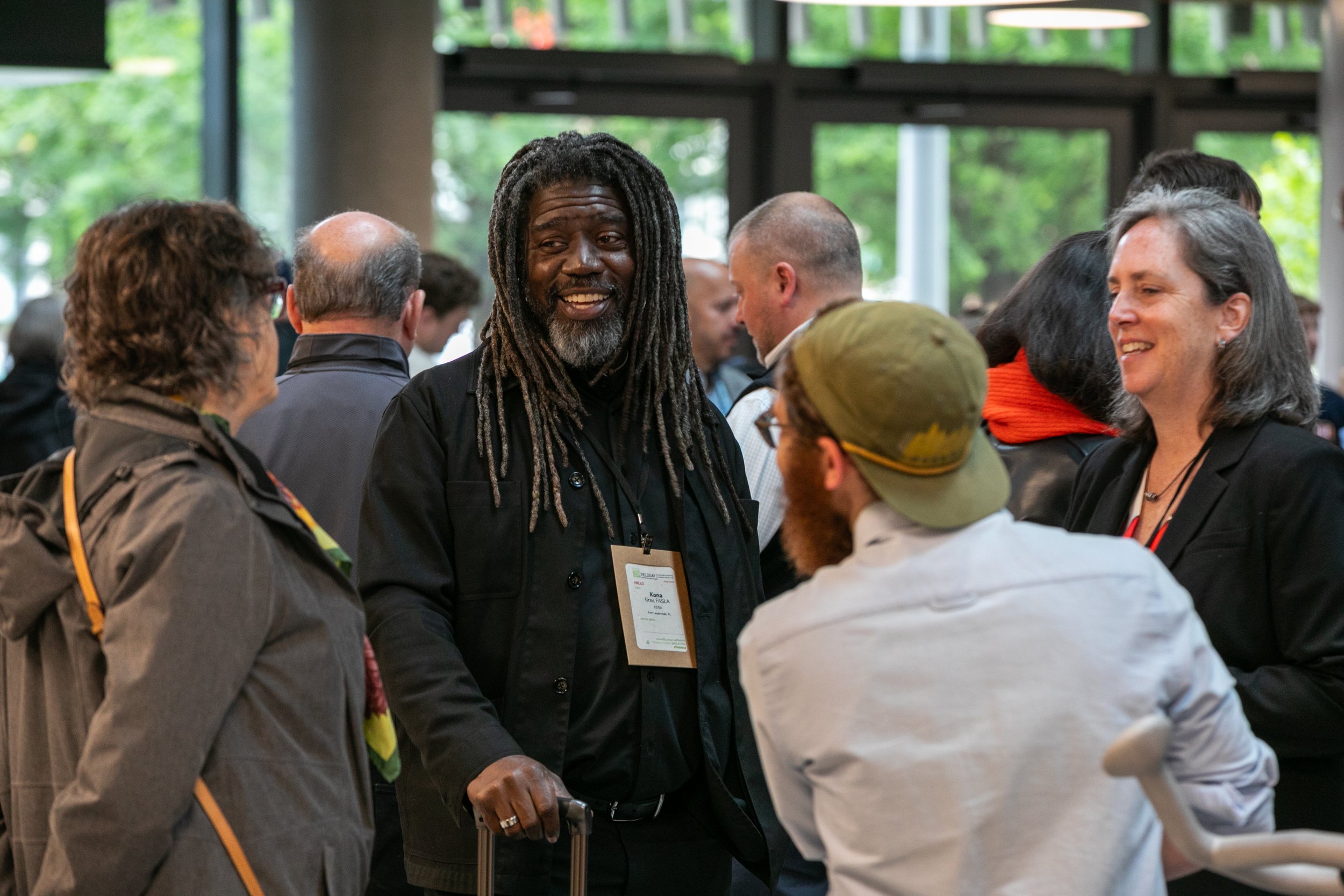
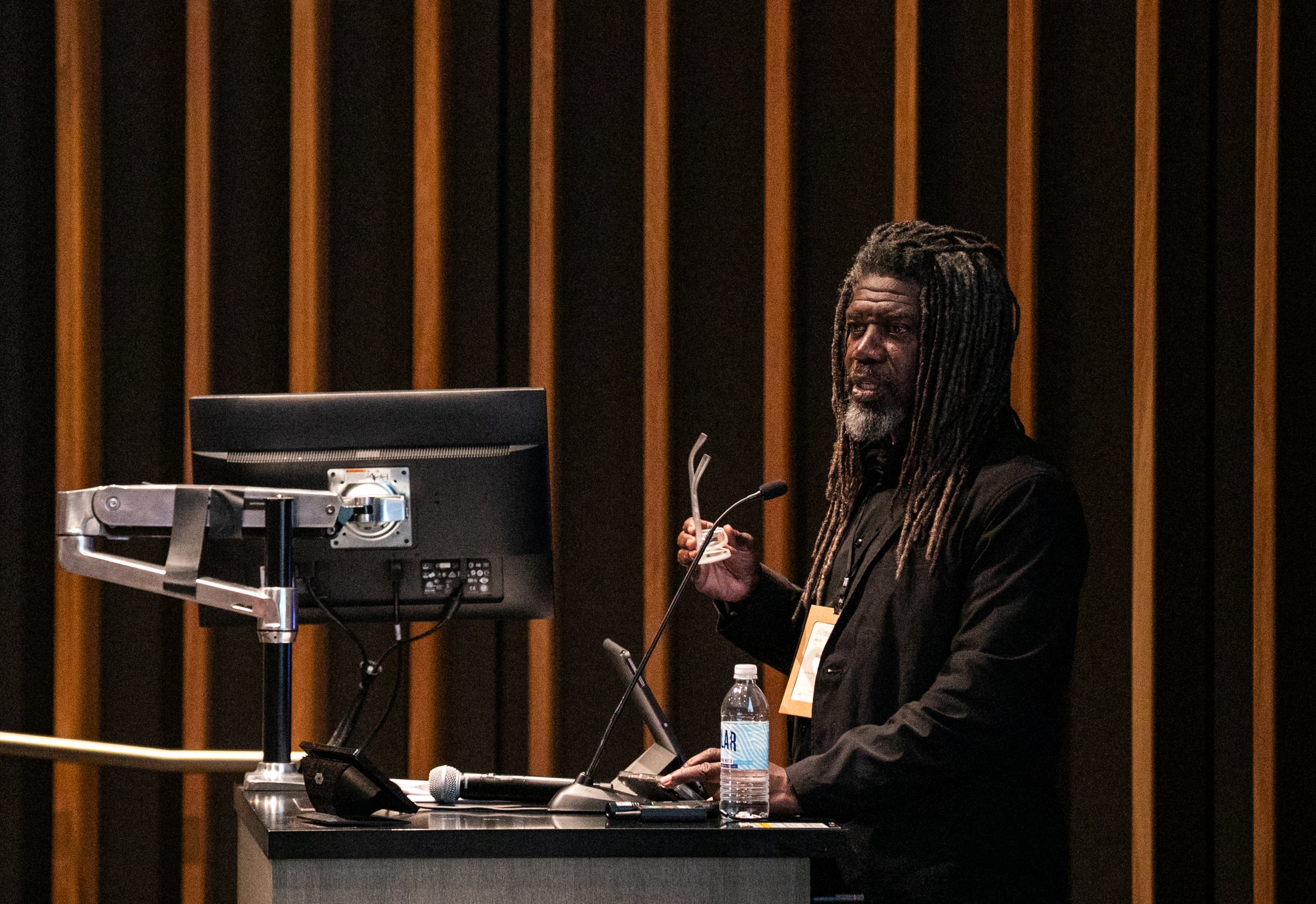
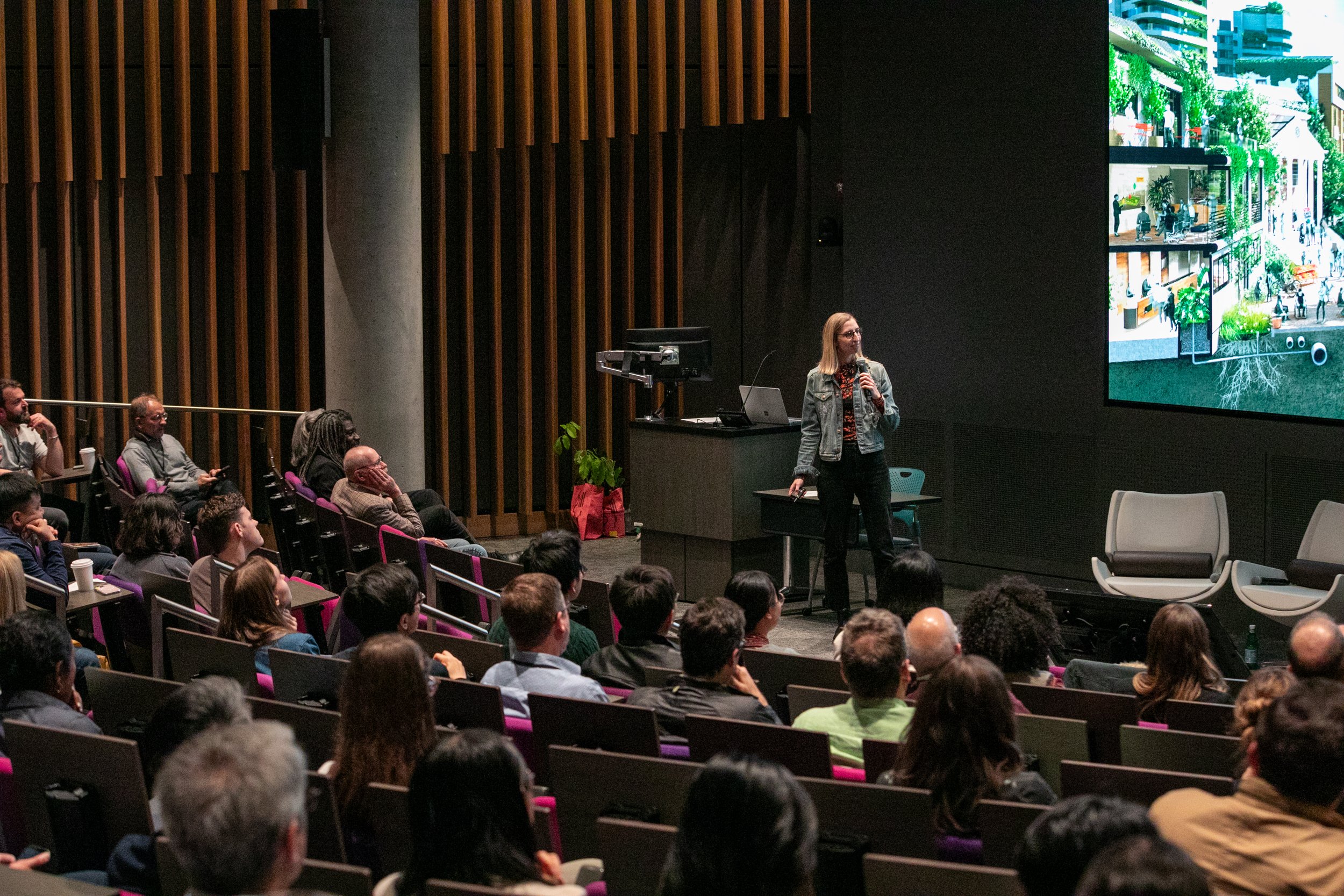
Fieldday is a day of education, connection, and celebration.
2026 Schedule + Education Sessions
-
Building Ecotypic Native Seed Systems in New England, Roanne Robbins + John Gedraitis, Van Berkum
Data, Design & AI – A Young Designer’s Climate Agency, Chenyan Wang, Elizabeth Kennedy Landscape Architect
Designing for Climate at Stellata, Jen Martel, ASLA, Copley Wolff
Healing the Land: A Collaborative Approach to Habitat Restoration, Nina Marelli, Fuss & O’Neill
Human Assisted Tree Migration, Jim Donovan, FASLA, Broadreach Planning & Design
LAtour: If Bruno Latour Was a Landscape Architect, Gandong Cai, ASLA, Sasaki
Leading with Passion: The "Power of One", Louis Fusco, FASLA, Louis Fusco Landscape Architects
Mapping Soil Organic Carbon Potential for Massachusetts, Bas Gutwein, Regenerative Design Group
Ship and Shore: Designing an Intertidal Gradient for Charlestown’s Shoreline, Michelle Li, Student ASLA, Harvard GSD
The Death and Life of Green Infrastructure: A Call to Action, Kelsey Kern, ASLA, Nitsch Engineering
To Bee or Not to Bee: The Lethal Toll of Neonics, Luisa Oliveira, ASLA, City of Somerville + Renee Scott, Grow Native Massachusetts
Throwing Shade: Rethinking Playground Surfaces in a Warming Climate, Sydney Trottier, ASLA, Stantec
Weathering Change on an Urban Street, Stephanie Nordhoff, Green Infrastructure Center
White Mountain Trails: 200 years past-present-future, Robert A. White, ASLA, RWLA
Workshops 1
11:30 am
-
Periods of transition, including leadership change, firm growth, workforce turnover, and shifting market demands, are defining moments for landscape architecture and engineering firms. Increasingly, women are stepping into senior leadership roles during these inflection points while carrying responsibilities that are critical to firm stability.
This session brings together senior women leaders to reflect on recent firm transitions and the challenges that accompany them. The discussion will explicitly name leadership headwinds and emotional labor often shouldered during these moments, including translating across generations, navigating communication styles, and managing conflict shaped by American societal norms around gender, authority, availability, and caregiving. While this work is foundational to firm culture and continuity, it has historically fallen more heavily on women and is frequently unrecognized.
Drawing from lived experience, panelists will explore how emotionally attuned leadership skills, including self-awareness, empathy, and authentic communication, strengthen trust, motivate teams, and guide organizations through uncertainty. The session reframes these skills as essential leadership competencies, not personal traits, and connects them directly to firm performance, retention, and leadership continuity. Attendees will gain actionable approaches firms can take to better recognize and distribute leadership labor including shared language, and practical frameworks and strategies.
Cheri Ruane, FASLA, Weston & Sampson
Cassie Bethoney, ASLA, Weston & Sampson
Jennifer Johnson, Nitsch Engineering
Jen Martel, ASLA, Copley Wolff
Laura Knosp, ASLA, Ryan Associates
-
A first of its kind hybrid regional plan and open source design toolkit, this project demonstrates the opportunities that farms and working landscapes provide for building soil health, increasing soil carbon sequestration and restoring regional biodiversity.
This session addresses some of the limitations of conventional landscape planning as well as the cost prohibitive nature of landscape architecture by offering a series of scalable, replicable design models for biodiversity and climate resilience that can be implemented on a wide range of landscapes. Attendees will explore the nexus between below and aboveground biodiversity and learn practical methods for collaborating with scientists on research and data collection, interpreting science and putting it into practice on a regional scale. We’ll examine how designed native ecosystems offer solutions to both the biodiversity and climate crises; our process of identifying community partners for collaborative planning, design, outreach and implementation; and how we worked with farmers and urban gardeners to build consensus and convert their landscapes to habitat. Two seasons of data on soil health and plant-pollinator networks will be presented, as well as our methods for identifying over 150 native pollinator species at risk of local extinction and the plants that support them. Finally, we’ll showcase a series of scalable, replicable designs that support these species. A wide range of community engagement strategies will be reviewed, as well as our plans for scaling implementation and outreach 2-5 years on.
Evan Abramson, Affiliate ASLA, Landscape Interactions
Rubén Parilla, Northeast Organic Farming Association | NOFA/Mass
Anna Gilbert-Muhammad, Pocasset Pokanoket Land Trust
-
This presentation examines a community-driven design framework developed through the Resilient Connecticut program for the Fair Haven neighborhood in New Haven and Downtown Mystic in Stonington. Moving beyond standard engagement, these projects utilize a "co-development" model that melds rigorous, science-based analysis with deep local knowledge to craft nature-based solutions (NbS). We will detail how Fuss & O'Neill used multi-day community charrettes and technical modeling of flood risks to ensure adaptation strategies are both ecologically sound and responsive to a community's unique sense of place. Attendees will learn how this dual approach successfully reduces climate risk while strengthening the social and cultural identity of vulnerable urban and coastal landscapes. Rather than construct barriers to the water, the communities chose to embrace the water that is predicted to rise, and to develop transformational concepts where the sense of place will persist that is improved by the proposed adaptations and nature-based solutions.
John Truscinski, Connecticut Institute for Resilience and Climate Adaptation
Andrew Bohne, ASLA, Fuss & O'Neill
Beth Kirmmse, Fuss & O'Neill
-
The Science and Engineering Complex (SEC) landscape at Harvard University demonstrates how stormwater resilience and rainwater reuse infrastructure can be integrated as both a functional and experiential system. Located in Allston on a former Charles River floodplain, the site faces significant climate and flooding challenges shaped by a long history of ecological alteration. The landscape responds by reinterpreting the historic Harvard Yard, through elevated landforms, meadows, and connective open spaces that balance flood protection with daily use.
This workshop will be conducted as a walking tour. (SEC is a short walk from the Treehouse.)
This tour examines how a unified stormwater strategy links building systems with the surrounding landscape to manage storm events on site. Roof and surface runoff are conveyed to bioretention basins, then to subsurface storage, allowing stormwater to be filtered, stored, and reused for irrigation—reducing potable water demand by approximately 70 percent. Native and climate-adapted plant communities enhance biodiversity, sequester carbon, and reinforce long-term resilience.
The project reflects an integrated planning process that aligns landscape architecture, engineering, mobility, and sustainability goals. More than an open space, the SEC landscape functions as a living laboratory, supporting research, teaching, and public engagement while demonstrating how campus landscapes can address climate adaptation through design.
Joe Wahler, ASLA, STIMSON
David Nielsen, Senior Associate, STIMSON
Ryosuke Takahashi, Senior Associate, STIMSON
Michael Igo, ASLA, Aqueous Consultants
Erik Hegre, AIA, Partner, Behnisch Architekten
Lunch
12:30 pm
Workshops 2
1:30 pm
-
Single family residences cover 2.3 million acres of land in New England. How these landscapes are designed has enormous impacts: directly, downstream, and in the public eye - whether our clients realize these impacts or not. This panel is a conversation among landscape architects leading a variety of residential projects throughout our region: forest/coastal, urban/rural, everyday lot/expansive estate. Panelists will share strategies for integrating climate and ecologically responsive solutions, such as stormwater management, native planting strategies, meadows, rewilding, and adaptations to riverine and coastal flooding as well as situations unique to the single family realm, such as: what if there are no regulations? – all the while designing for contemporary families. Drawing on a range of residential examples, they will connect scales, issues, and client contexts as they discuss ecological performance, changing perceptions, and “sneaking it in.”
Tom Hand, ASLA, SiteForm Studio, moderator
Tara Vincenta, FASLA, Artemis
John Haven, ASLA, LeBlanc Jones
Seth Kimball, Aceto Kimball
-
In 2018 Boston was inundated by back-to-back nor’easters defined by king tides that brought record breaking coastal surge into the downtown area and became a critical turning point in the city’s approach to urban development. These major storm events proved that urban fill and hardened edges were no longer a match for New England’s weather systems and pushed climate resilience to the forefront of the city’s plans. With guidance from Climate Ready Boston, Boston Parks and Recreation Department quickly became a leader in implementing improvements across coastal sites situated within major flood pathways, including Langone Park and Puopolo Playground, Ryan Playground, and Moakley Park, embracing innovative design strategies like cantilevered decking, creative landforms, reclaimed materials, and subsurface infiltration systems to address the challenges that arise when ever-evolving conditions clash with urbanization, past and present.
Living with water is a significant shift from historic urban planning in Boston, but these projects exemplify how strong community partnerships and intentional support from federal, state, and municipal agencies can activate new practices that embrace an inclement reality. Rather than choose between recreational goals or environmental priorities, Boston parks are leading with adaptable designs that accommodate multifunctional programming and inspire more compelling, place-based public spaces.
Cathy Baker-Eclipse, ASLA, City of Boston
Nayeli Rodriguez, City of Boston
Brandon Kunkel, Weston & Sampson
Gracie Swansburg, Weston & Sampson
-
Designing multimodal streets requires balancing safety, accessibility, user experience, and environmental goals while accommodating diverse travel needs. At the sidewalk level, pedestrians increasingly move across bike lanes and transit spaces in addition to interacting with motor vehicles. This can create challenging conditions, especially for those with mobility, sensory, or developmental disabilities. This session presents best practices for designing sidewalks that support intuitive movement and pedestrian comfort in dynamic multimodal environments.
The presentation begins with a brief overview of how street use has evolved from car-oriented corridors to shared, multimodal places. It draws from the latest national and regional guidance, including PROWAG and three guides that Toole Design authored: the AASHTO Guide for the Development of Bicycle Facilities, the Montgomery County Accessibility Guide, and the Montgomery County Curbless and Shared Street Design Guide. These resources provide deeper insight into pedestrian needs than many local or state standards. Speakers will highlight the unique accessibility challenges faced by people with low vision, mobility devices, and developmental disabilities on streets shared by multiple user types.
Using project examples, speakers will explore tradeoffs within street cross sections and demonstrate how design details can balance operational requirements with social space and environmental goals.
Kathleen Ogden Fasser, Toole Design
Stephanie Weyer, ASLA, Toole Design
-
This session explores community-driven approaches to repairing and transforming public spaces through both large-scale infrastructure and small, high-impact interventions. In North Adams, Massachusetts, a Reconnecting Communities project examines mitigating the impacts of an aging overpass through collaborative planning. In Providence, Rhode Island, case studies highlight how community-led implementation and stewardship shaped award-winning public spaces. Together, these examples demonstrate how engagement can guide meaningful, place-based change in post-industrial urban centers of New England.
Marya Kozik, City of North Adams
Morgan Everett, MASS MoCA
Chelsea Kilburn, ASLA, Stoss Landscape Urbanism
Adam E. Anderson, RLA, LEED AP, WEDG, Design Under Sky
Break
2:30 pm
Workshops 3
2:45 pm
-
New England power lies in its many cities and towns. This panel brings together representatives from four urban municipalities—Boston, Cambridge, Somerville, and the Town of Brookline, Massachusetts—to share lessons learned from engagement in their communities with public open space projects and community events. Panelists will present projects that required extensive public outreach and collaboration. They will illustrate how community engagement and participation influenced the project outcomes, design decisions, and long-term community support after construction.
Through real-world examples, speakers will highlight the outreach tools and engagement strategies they used, discussing what was effective and what was not. The panel will explore common challenges, including reaching all members of the communities to assure equitable representation, what is effective in promoting meetings and events, how to ensure all feedback is received, sustaining engagement throughout a project, handling high levels of participation at events, and growing large annual community programs. Attendees will gain practical insights into building trust and fostering meaningful participation in public-sector park and open space planning, community events, stewardship days, and long-term stewardship of public parks and open spaces.
Jon Bronenkant, ASLA, City of Sommerville
Aaron Kraemer, Town of Brookline
Lauren Bryant, ASLA, City of Boston
Cortney Kirk, ASLA, City of Cambridge
-
What begins as a simple circle on a piece of paper ends with a living tree in the ground. That circle represents years of decisions most designers never see— and, possibly, a long list of problems that could have been avoided.
Early collaboration among designers, contractors, and growers leads to more resilient landscapes. Aligning design intent to supply realities can improve tree selection and communicating clear specifications can facilitate installation success.
We'll explore how improved planting practices and early interventions through monitoring protocols create healthier, more resilient sites: how to inspect root systems at delivery, recognize and advocate for trees with good structure, understand what planting depth really means, identify common installation issues and what to monitor for during plant establishment.
Christopher Miczek, Charbrook Nursery Manager
Leland Wheeler, arborist, STIMSON
Arlene Murphy, Horticultural consultant
Stephen Schneider, Northeastern University
-
Rarely is the way to save a garden to move it. Yet for Roberto Burle Marx’s Cascade Garden, that was precisely the challenge facing the team behind ‘Longwood Reimagined’. This session explores the conceptual and technical challenges met to relocate a living work of landscape architecture while elevating its presence within Longwood’s collection of conservatory gardens.
Despite its modest footprint in a repurposed greenhouse at Longwood Gardens’ conservatory complex, Roberto Burle Marx’s Cascade Garden, his only extant garden commission in North America, was identified as a critical asset in Longwoods’ collection of gardens created by notable landscape architects. As part of ‘Longwood Reimagined’, the institution and its team of designers seized the opportunity to protect this landscape by rebuilding the garden —stone by stone, plant by plant— in a new location and in a modern greenhouse enclosure that provides the infrastructure to support its long-term health.
Panelists will discuss the innovative planning that led to a defensible preservation strategy, as well as the intensive technical documentation process required to carefully disassemble and reconstruct the garden using both original and contemporary construction methods within a new, state-of-the-art enclosure. The conversation will also address how modern accessibility standards were integrated without compromising the garden’s defining spatial and experiential qualities, and how the reimagined Cascade Garden now contributes to the broader fabric of landscapes within the core of the new West Conservatory complex.
Anita Berrizbeitia, FASLA, Harvard University Graduate School of Design
Joshua D. Kiehl, AIA, John Milner Architects
Jeremy Martin, ASLA, Reed Hilderbrand
-
Employee-owned firms prioritize worker empowerment,democratic decision-making, and flexible business transitions. They differ from traditional businesses in that they give all employees, regardless of their role, a mechanism to become business owners, participate in profit-sharing, oversee day-to-day operations, and engage in long-term strategic planning.
The speakers in this panel represent three companies and two different employee-owned business models. Regenerative Design Group (RDG), was founded in 2009 as an LLC with a mission of creating diverse, ecologically resilient, and productive landscapes. After a decade in business, the founders committed to their long-held goal of worker-ownership, and in 2021 RDG transitioned to a worker-owned cooperative. Since becoming worker-owned, RDG has grown its company, increased profits, and weathered significant staffing challenges. We attribute our ongoing strength in part to our collective refinement of the principles and practices that guide RDG’s governance, day-to-day operations, and studio culture.
Diggers Cooperative was initially formed in 2012 as a fiscally sponsored project of Worcester roots project as a permaculture design and installation business. In 2020, Diggers moved to Acton, ME and incorporated as a Cooperative in 2020 as a worker-owned cooperative, with three founding worker-owners who are also soil nerds, climate optimists, and community oriented change makers.
Tighe & Bond is a 100% employee-owned firm founded in 1911. Established in Holyoke, MA by an Irish immigrant as an engineering practice, the firm has grown into a 600+ person, multidisciplinary organization with offices throughout the Northeast. Employee ownership began with a transfer of capital stock in 1956. Today, the company is 70% owned by its Stock Ownership Program (SOP), held by 158 employee members, and 30% by its Employee Stock Ownership Plan (ESOP), which includes all employees.
Genevieve Lawlor, Affil. ASLA, Regenerative Design Group
Rachel Lindsay, Affil. ASLA, Regenerative Design Group
Scott Guzman, Diggers Cooperative
Sean Ragan, ASLA, Halvorson | Tighe & Bond
Coffee
3:45 pm
Workshops 4
4:15 pm
-
Thinking of converting your client’s lawn to a meadow? Seed, plugs, plants, sod — or plant chaos? How long until it stops looking “accidentally abandoned”? Hear real field stories of meadows that thrived… and ones that definitely kept us humble. Learn what works, what doesn’t, and what we’d never do again.
Topics include:
Saying goodbye to grass (with herbicides—and without)
Smart seeding: mix design and sourcing
Live planting approaches
Soil fundamentals
Key installation decisions
Maintenance and adaptive management
Writing specifications that set projects up to succeed
Offshoots and Larry Weaner Landscape Associates share real-world lessons from Boston-area projects that transformed lawn monocultures into thriving, biodiverse meadows. Featuring both public and residential sites—including examples from numerous private landscapes as well as Blessing of the Bay Park, New England Biolabs, Wellesley College Botanic Garden, and Mount Auburn Cemetery—this session walks through installation, management, and long-term success.
Kate Kennen, FASLA, Offshoots Inc
Rebecca Kagle, Larry Weaner Landscape Associates
Ryan Corrigan, Offshoots Inc.
-
The village of Chester, Vermont has been systematically upgrading its village center with many small projects led by landscape architects that together have had significant impacts on the quality of the community. The village leveraged its own funds, combined with numerous grants and volunteer efforts to create a new pocket park, add to the tree canopy, and install other local amenities.
Similarly, Maine based landscape architects are helping coastal communities address climate change and sea level rise over time. No matter the size or location, the scope of resilience projects is not solved within one lot line; effective strategies rely on incremental improvement enacted by public and private sector entities over many years.
This conversation features two landscape architecture practices helping communities plan beyond lot lines, providing tangible, inspiring, and real examples of how many small projects in some of our smaller New England places are adding up to something big.
Scott Wunderle, ASLA, Terrigenous
Blake Sanborn, Richardson & Associates
-
Collaboration between stormwater, public works, open space planning and parks departments results in the creation of spaces that become more than a sum of their parts, maximizing the value and utility of our open space designs and fostering a sense of community ownership of these shared landscapes.
Two fields of practice – public open space planning and green stormwater infrastructure design – require the same basic ingredient: open space. This presentation will explore two case studies in community design, first from the community planning level, and second at the individual site design level.
In New Bedford, MA, the new city-wide green infrastructure implementation strategy uses existing land patterns, life-cycle costs, and environmental justice considerations to develop a prioritized implementation roadmap to maximize stormwater control, improve neighborhoods, and create more resilient, equitable communities. A green infrastructure tool kit was developed to standardize and assist in site selection and implementation of public right-of-way and on-site green infrastructure designs.
At Arsenal Park in Watertown, MA, an historic existing public park has undergone a complete redesign under the stewardship of the Watertown Conservation Commission to enhance its heavily programmed public open space amenities while addressing and showcasing the city’s new stormwater ordinance in the process. While the departmental oversight and funding of these two projects began in separate places, the end goals are the same: dynamic, multi-functioning public open spaces that prioritize both public stormwater utility and open space amenities for their respective communities.
Nicholas Watkins, CDM Smith
Michael Dodson, CDM Smith
Tyler Glode, City of Watertown
-
As design practitioners, and as immigrants (many of us), we use our imagination and technical skills to offer people of all cultures a better world to live in.
Today, in the midst of economic uncertainty, political pressure globally, and challenges from new technologies, one might wonder: what doesn’t change in design? The answer is simple and enduring: people. People who design, and people we design for.
This discussion will highlight the process of exchange that weaves alongside physical design. We will hear approaches, thoughts, experiences, challenges, and surprises from design leaders of three local and global design firms about their work with people in and from different areas of the world.
Haipeng Zhu, ASLA, moderator
Tao Zhang, FASLA, Sasaki
Kishore Varanasi, AICP, CBT
Therese Graf, ASLA, MASS
Break
5:15 pm
Closing Plenary
5:30 pm
Reception
6:30 pm
Fieldday offers professional continuing education for landscape architects, planners, and architects.
Depending on the workshop sessions chosen, attendees may earn up to
7.0 LA CES HSW
6.0 AICP CM credits (many Sustainability + Resilience)
Fieldday has been submitted for AIA LUs. Status is pending and will be updated here once approved.
NOTE there is no advance sign up for workshop sessions; like the ASLA National Conference, attendees choose on-site. Each session will be clearly labeled for the credits approved.
Curious about this new conference? Check out photos and materials from our first two years…
THANK YOU, 2026 Fieldday Sponsors!























FAQs
-
Really exciting! Fieldday is the annual conference for New England's professional landscape architecture community.
Fieldday 2024 was the inaugural edition.
AND
Fieldday will be followed by a series of site tours.
During COVID, when we couldn’t hold large, indoor in-person gatherings; we turned things “Inside/Out” and took the learning sessions outside. Now in its sixth year, this series continues! These landscape architecture site tours happen throughout the year, across New England. And, here, Inside/Out meets the conference, again!
-
We are! Fieldday is created collaboratively by the ASLA Chapters of New England.
Whether you’re a member of BSLA’s Maine and Massachusetts chapter, OR from another ASLA chapter OR not a member at all, we invite you to participate in this conference. All in our landscape architecture community are welcome.
-
We hope so! Especially if you and/or your company are passionate about the landscape architecture community. Sponsorship opportunities are limited so contact Billy Craig today at conference@bslanow.org with interest or questions.
-
All good things! The summit, now in it's fourth year, will be held on the main auditorium stage at Fieldday. As in the past, it will be anchored by the Climate Action Lighting Talks, which will now take place from the main stage AND will be broadcast (free, as always) via livestream to those online in New England and beyond.
-
Because of Fieldbook! Our annual ideas magazine. Fieldday and Fieldbook are both ways that we share knowledge, celebrate and catalyze our community, as we work together to advance the practice of landscape architecture in New England and beyond.
Fieldday also reminds us of that late spring day in the school year when we got to take a break from the normal routine and have fun together. This is that, too.
-
Yes! Fieldday will be followed by a series of site tours.
During COVID, when we couldn’t hold large, indoor in-person gatherings; we turned our conference “Inside/Out” and took the learning sessions outside. And — you guessed it — it’s pretty awesome to experience landscape architecture in the landscape.
Now in its sixth year, this series continues! These landscape architecture site tours happen throughout the year, across New England. And, here, Inside/Out meets the conference, again!